
Testimonials Index
ON THE ART OF PHOTOGRAPHY BY ALEXANDRE HORTA E SILVA
Ivo A. Ibri (2020)
Professor of Graduate Programs in Philosophy and Communication & Semiotics, Pontifical Catholic University of São Paulo (PUC–SP)
Alexandre Horta e Silva’s photographic work consistently displays a refined sensibility that reveals, in his subjects, qualities whose depth only the talent of a true artist can bring to light.
This operation of photographic art—of exhibiting what cannot be perceived by a gaze habitually guided by concepts and, therefore, capable of grasping only what would logically fit within them—becomes, in Alexandre’s work, a kind of mission of genetic nature. A mission that truly belongs to the role of Art: to lead aesthetic experience back to its most primitive dimension, that of pure contemplation.
It is within this contemplation that the work first reveals itself in its unity, showing its truly holistic nature and later inviting speculative reverie about what, in the object, existed in potentia as possibilities of being—beyond what conceptual language could ever map.
This mission of art is fulfilled in the many nuances of forms, colors, and lights present in the photographs created by Alexandre Horta e Silva. In each of them, the artist’s perception offers, to whoever experiences the work, his generous sharing of beauty.
One could say that the necessary rest of the warrior that art can offer us—in a kind of hiatus within Chronos, in which we sharpen our own sensibility for a renewed perceptive journey before the human saga in the real world—finds in Alexandre’s photographic work one of its most expressive contributions.
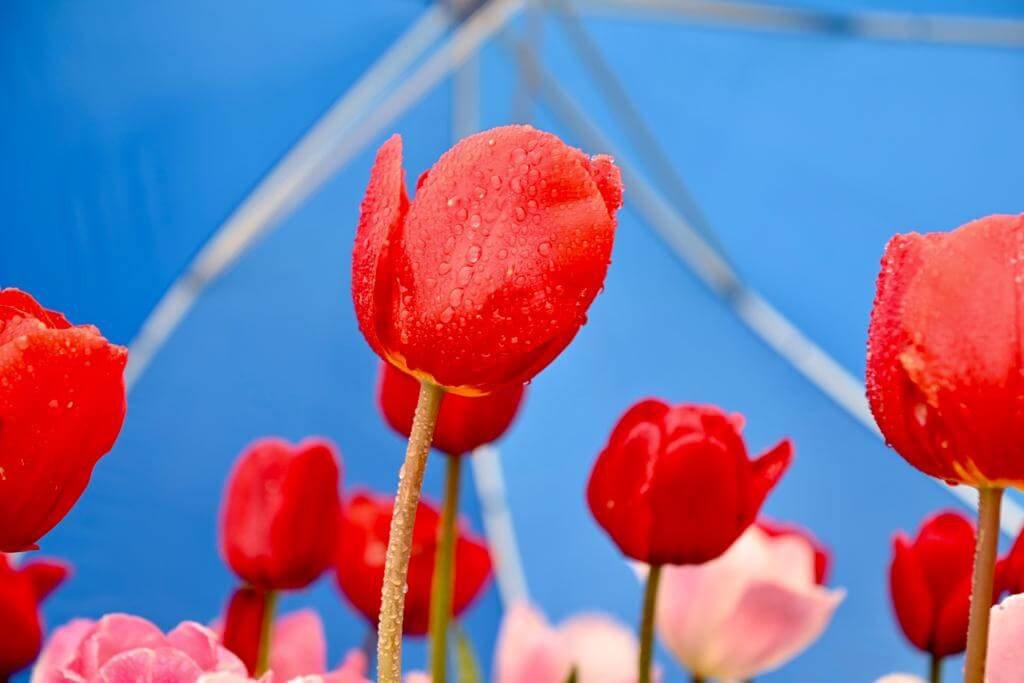
AROUND CREATION
Rosane Pavam (2020)
Journalist and historian, PhD in Social History, University of São Paulo (USP)
Photography is a vibration that materializes, inside the photographer, what unfolds out there. And what the photographer sees is what photography is.
Perhaps this definition of art, a paraphrase of the Austrian photographer Ernst Haas, fits the relationships that Alexandre Horta e Silva establishes in his images.
His gaze seeks objects that are profound—and therefore hidden. Yet he does the opposite: he reveals the exuberant potential within them, in an apparent contradiction to the introspective impulse that turns inward. It is as if his photographs exalted that sequence of internal events that precedes the explosion of birth, the first appearance of someone in the world. His images grow in expectation until the moment they can no longer contain themselves. A ballet toward creation.
Their colors vibrate and leap at the eyes. And for this reason, many may not consider his work aligned with a strictly realist current. But who can guarantee what is real according to certain gazes? The translucent faces, the reflections in shop windows, the extreme close-ups—everything multiplies in his photographs in such a way that we almost feel we could hold them in our hands.
This tactile realism, of what is felt and perceived beyond mere sight, draws the viewer toward the images of this Brazilian artist.
Perhaps this is what he invites us to experience with his photographs: a plunge into the perceptive instant in which things come into being.
His practice contains all the virtues of reality. Its most unsettling one may be this: even when he cannot tell us everything, within the borders that delimit the image he builds allusions to what the photographer could not inform—in that fraction of time and light, from that angle and chosen space. His intensely researched light is his drawing. A light that does not seem interested solely in identifying objects. Alexandre follows—perhaps without knowing—a law of photography, as formulated by the Frenchman Henri Cartier-Bresson: “the true photograph does not exist to identify, but to penetrate.”
His subjects do not revolve around grand events, street moments, or the mood that arises from displacement. What he is willing to look at is what has been forgotten. Everything that normally rests beside the great theme but is rarely noticed.
He is a young photographer—an artist who seems to preserve in himself something of the child’s receptivity to the world, or of the traveler who enters a foreign country. His photographs bring surfaces that multiply, as though we were observing them through a microscope. And often, his images of human beings—his portraits—gain the contours of doubt, softness, and velocity.
Objects pursued to their deepest essence, and human beings observed from the distance of mystery… once again, the opposite of what we expect. A seamless humanization of everything found in nature. What has skin—what has epidermis and form. A feline in motion still glimmers in the marks of its fur. The photographer does not annul choice; rather, he extends this intense force of observation to a woman with tattoos.
The designs on that body imprint a cadence, a musical rhythm on the viewer. And the model does not need to let go of the pose in which she moves within herself. She is inscribed in a geometric circle that seems to echo the classical Fibonacci sequence—shells that also repeat in some of his panels in the large clock whose structure he sees from within.
It is a game that demands the complicity of the observer. In resting our gaze on Alexandre’s photographs, the specter developed by Roland Barthes in Camera Lucida loses much of its force. Barthes linked the photographed object to the birth of light, to the notion of a terrifying spectacle. For him, it was certain that, in photography, the dead returned. But where is death in the illuminated constructions of this artist?
His light, so concrete, nullifies the idea of passing. It is the creative light that the author perceives beyond the ordinary—and this unfolds into a display of subjectivities as we observe and transform its context with each new encounter.
Each of his photographs holds the virtue of acquiring its own readings of reality. A symbiosis that, at that moment, becomes a shared work between photographer and viewer.
Alexandre Horta e Silva, who is also a psychoanalyst, seems to throw himself with intensity into the irresistible force of photography. The craft of the photographer distinguishes itself from so many others in the arts because it carries a real risk: exposing oneself without filters to the richness and misery of the world.
Some artists may retreat into exclusive meditation in their studios, at the piano or at their desk, but the photographer will always stand at the edge of an unknown world—faced with the urgency of assimilating it and returning it, transfigured, to the one who observes.
This act of transfiguration seems to define this photographer’s specialty—and his enchantment.
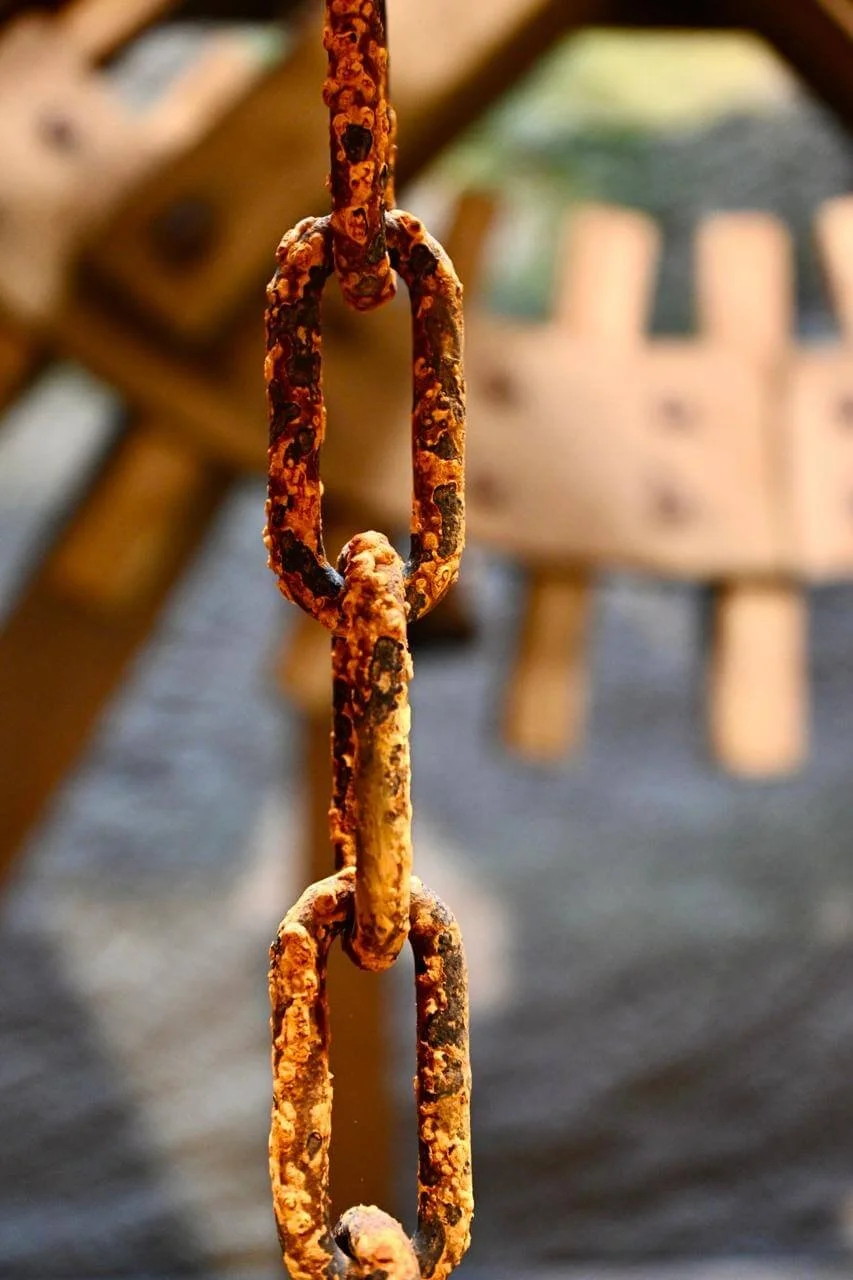
THE PHOTOGRAPHY OF ALEXANDRE HORTA E SILVA II
Rafael Guanaes (2017)
Architect, specialist in the History of Art Museums, curator, psychoanalyst.
The first part of this text was written three years ago. My dialogue with Alexandre’s photography continued. We spoke about art and about the history of art; we exchanged ideas on the place of art in life and in the world and, more recently, we began to systematically direct our focus to Alexandre’s photography. On my part, I sought to deepen the idea of estrangement—a concept that guided my first analysis. We arrived at enchantment and eventually evolved toward a concept that satisfied us even more: astonishment.
The fragment of text I present below is authored by Professor and Critic Teixeira Coelho Neto, written in 2002 on the occasion of an exhibition at MAC-USP, whose theme was “Strategies for Astonishment.” He was then the director of the institution. With this fragment, I hope to contribute to a broader approach to Alexandre’s photography.
“To be shown, not to be said”
Astonishment does not require, for its effect to take place, any operation of understanding, deconstruction, or analysis. It does not require interpretation. Of course, today, everything accepts an interpretation—but astonishment dispenses with it. It does not necessarily refer to anything outside itself or prior to itself. It is not an operation about something else; above all, it is not a citation.
Astonishment proceeds through totalities, through a sensation that is broad and indivisible, in parts. Its meaning is equal to itself. Better yet, it has no proper meaning: it acquires only “meaning”—that which a certain person makes of it, over a singular process tied to a meaning to which that person had access.
To be apprehended, astonishment does not require being examined by an eye equivalent to a cinema camera that sweeps a field of vision. What gives rise to astonishment is not something that can be accumulated from individual parts. The multiplication of stimulating units does not provoke astonishment. On the contrary, it repels it.
Thus, words in logical sequence or scattered in space rarely provoke astonishment. A single word may astonish; several rarely do. On this point, a proposition by Wittgenstein regarding the relationships between what is to be shown and what is to be said remains valid: what can be shown cannot be said. This is the case of astonishment. Nothing or almost nothing of what belongs to the domain of what is said—with its rules, its conventions, and thus its predictabilities—is capable of producing astonishment, an operation situated in the realm of the ecstatic.
I believe that, for now, there is nothing more to be said…
THE PHOTOGRAPHY OF ALEXANDRE HORTA E SILVA I
Rafael Guanaes (2014)
Architect, specialist in the History of Art Museums, curator, psychoanalyst.
Unveiling the poetic dimension of an artist’s body of work takes time. Not a time measurable in minutes, hours, or days. It is another kind of time. Silent coexistence, distances, reflections, chance encounters. For many years I lived alongside a small number of images produced by Alexandre—just a few black-and-white photographs, printed in small format, of historic towns in Minas Gerais. Suddenly, that peaceful coexistence began to be overtaken by other images. Walls filled up with large-format works, until one day Alexandre mentioned he would publicly present his photographs—his hobby. I then thought about the courage and generosity that such a decision always entails. Whether they know it or not, what artists show us at the moment of their unveiling is not only photographs, sculptures, poems, images, works, art. These words are insufficient to describe what an artist does; they only refer to the final result of a long process.
The Presence of Images
Aware of the precariousness and insufficiency of any conceptual set that attempts to define what an artist’s work is—what art is—I turn to the vague idea that an artist’s work is a proposition about the world. Not always, and for many reasons, does the world accept such a proposition. The same happened to Van Gogh, whose proposition was not accepted in his time. Thinking about Alexandre’s work, the questions that always arise for me move in the same direction: What is (or are) the world-proposition(s) in this body of work, in this labor? What does Alexandre’s gaze propose to us? What is the meaning of his images? Do they contain a world that expresses itself artistically? Is there a kind of poetry constructed by his gaze?
Alexandre has no preferences regarding the things of the world. He does not seek them out with prepared routes, nor does he go after his motifs. On the contrary, he allows the things of the world to find him. Perhaps the operation occurs in a subtler way: image and photographer meet, recognize one another, and the photographer registers that presence. Alexandre’s work aims to intensify these presences. There is no past, there is no future. The eye finds a surface, and within it discovers its maximum potency—its nearly absolute presence.
In revealing presences, Alexandre does not produce “instants,” a word often used in photography and, also, since the mid-19th century, pointed to as one of modernity’s trademarks. Today’s modernity unfolds into an avalanche, a flood of images that demand, shout, and insist on being recognized. But which, among this profusion, are capable of leading us out of the avalanche? Contrary to this tendency, Alexandre’s unrecognized images attract us, touch multiple senses, and provoke estrangement. We do not immediately recognize them—or if we do, certainty does not settle. After all, are we seeing what is shown, or are we being seen?
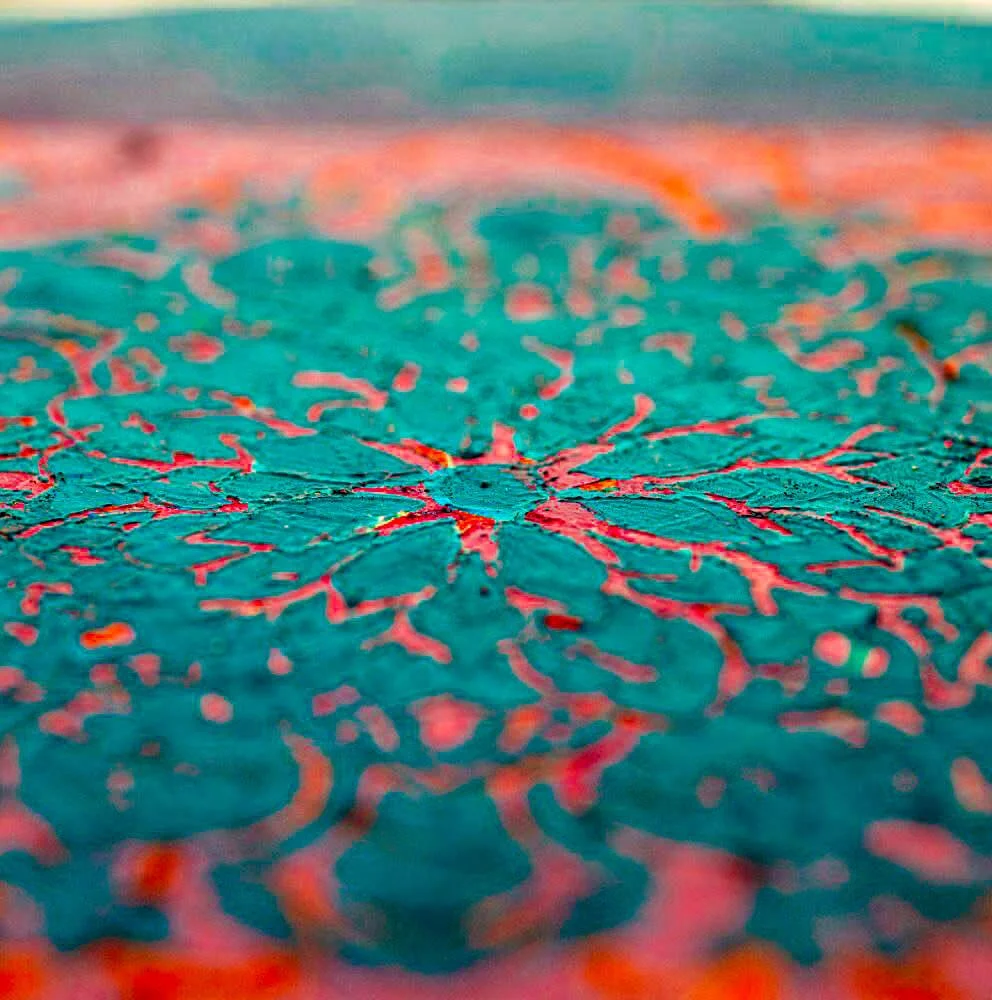
A MULTISENSORY JOURNEY
Roberta Ristori (2017)
Photographer and designer, with a background in Law and a specialization in Journalism. Works in visual communication and curatorial projects, collaborating on artistic and editorial initiatives.
“Le immagini non sono figlie della realtà, ma sono figlie dell'uomo. Casomai sono nipoti della realtà. E sono parenti di Dio."
"Images are not daughters of reality, but daughters of humankind. They are, at most, reality’s granddaughters. And they are related to God."
Leonardo Da Vinci
Alexandre Horta e Silva maintains a singular relationship with photographic art — one that makes his work especially compelling. His images possess their own personality and can be appreciated both individually and in dialogue with one another, always guided by a single thread: the pleasure of discovery.
Nothing in his photographs is constructed a priori. The artist’s gaze is wide, contemplative, and curious. His constant experimentation and openness lead him beyond the instant of the click, extending the creative gesture into the post-production phase, where new possibilities emerge and the work renews itself.
This posture allows the viewer to be magnetized by the same sense of wonder that moves the photographer. Alexandre never loses touch with the marvel of the unrepeatable instant — the profound essence of the photographic act.
Far from predefined models or rigid structures, his images reveal an open gaze, capable of transforming mere record into vision. As Ansel Adams wrote: "You don’t make a photograph just with a camera. You bring to the act of photography all the books you have read, the films you have seen, the music you have heard, the people you have loved."
In this sense, Alexandre’s work reflects a rich and heterogeneous culture, woven from multiple references. Cosmopolitan, born in São Paulo, and a lover of the arts, his photography bears witness to a spirit in constant dialogue with the world.